Loquat Leaf: History, Benefits, and How It May Support Healthy Blood Sugar

Loquat Leaf has been used for centuries in traditional medicine, and today it’s gaining attention for its potential to support blood sugar balance, metabolic health, and overall wellness. Below is an in-depth, research-backed breakdown of what Loquat Leaf is, how it works, and why it has become such a popular natural ingredient.
What Is Loquat Leaf and Where Does It Come From?
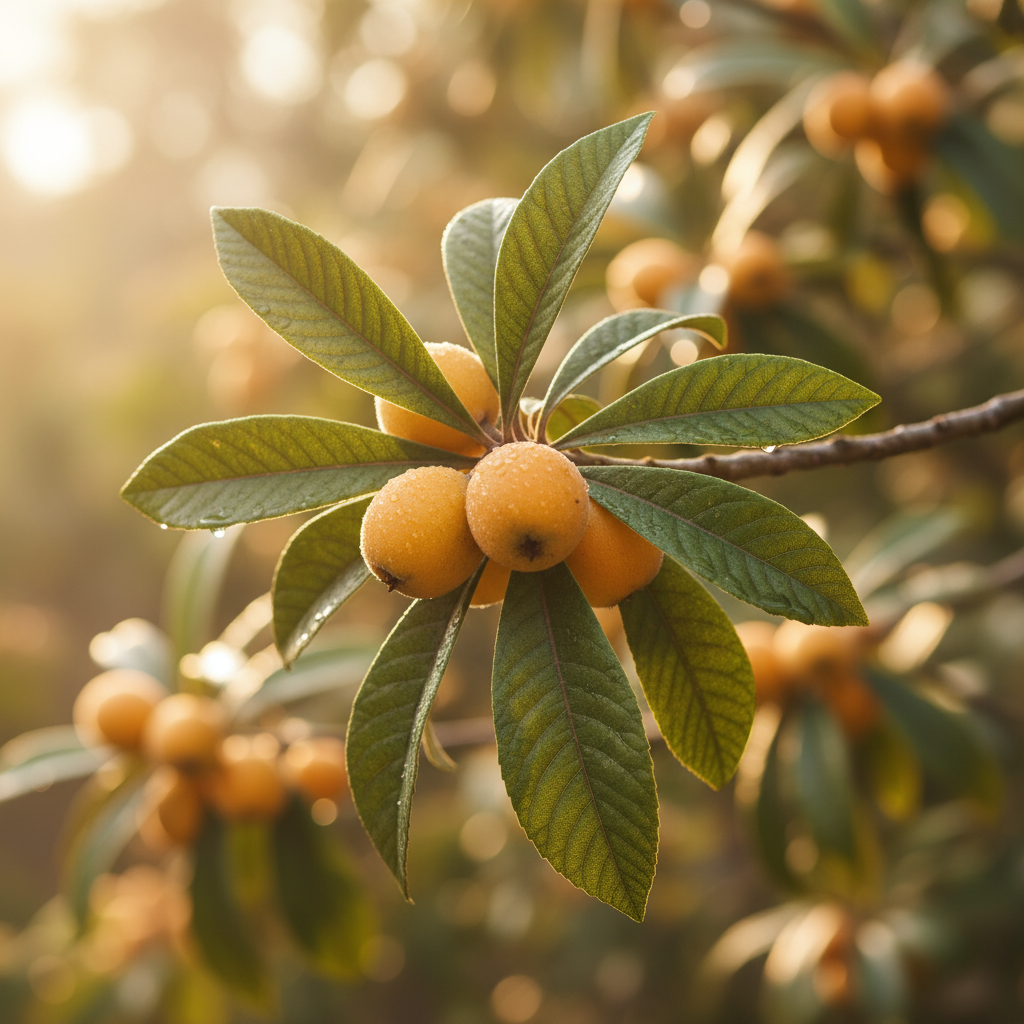
Loquat Leaf comes from the loquat tree (Eriobotrya japonica), also known as Japanese plum or Chinese medlar. This evergreen tree is native to China but now grows across many warm regions of the world. Its leaves are large, dark green, and leathery, and while the fruit is valued for its flavor, the leaves are where most of the medicinal importance lies.
In Traditional Chinese Medicine (TCM), loquat leaf, known as Pi Pa Ye, has been used for centuries to soothe coughs, support the lungs, calm the stomach, and ease respiratory irritation. Records from the 16th century describe its use for coughs, nausea, and digestive discomfort. Importantly, historical TCM texts mention loquat leaf for “wasting-thirst,” an old concept corresponding to symptoms of diabetes, suggesting traditional awareness of its effects on thirst, urination, and blood sugar-related symptoms.
In Japan, loquat leaf tea (biwa cha) has been enjoyed for generations as a soothing tonic for general health, especially for the lungs and skin.
The strong historical background provides meaningful context for modern interest in Loquat Leaf as a wellness botanical.
What Active Compounds Are Found in Loquat Leaf?
Loquat leaves contain a wide range of natural compounds that give them their wellness-supporting properties. According to the research summaries in your document, the most notable categories include:
-
These are some of the leaf’s most pharmacologically active compounds. They include:
Ursolic acid
Oleanolic acid
Corosolic acid
Tormentic acid
These triterpenes are linked to anti-inflammatory effects, improved metabolic function, and cellular signaling support.
-
Loquat leaf contains high levels of:
Quercetin
Kaempferol
Chlorogenic acid
Epicatechin
These compounds are powerful antioxidants, helping protect cells from oxidative stress, which is linked to metabolic imbalance, inflammation, and accelerated aging
-
These lesser-known compounds appear to offer metabolic benefits, including support for fat metabolism and liver health.
-
These secondary compounds contribute additional antioxidant support and may play a role in digestion and immune balance.
Together, these compounds create a synergistic effect, meaning they work better combined than individually, a concept common in herbal medicine.
How Might Loquat Leaf Support Healthy Blood Sugar?
One of the most compelling areas of modern research on loquat leaf is its potential role in glucose metabolism.
What Does Research Suggest?
While more human studies are needed, early evidence from animal and cell studies is promising:
Studies in diabetic animal models found that loquat leaf extract lowered fasting blood glucose, improved insulin sensitivity, and reduced signs of insulin resistance.
Researchers isolated a compound called cinchonain Ib, which was shown to stimulate insulin release from pancreatic cells — a mechanism that may support healthy blood sugar regulation.
Loquat leaf extracts improved glucose uptake in cells and helped maintain healthier lipid levels, pointing to broader metabolic benefits.
How Does Loquat Leaf Work?
Researchers believe Loquat Leaf may support glucose balance by:
Helping the body absorb carbohydrates more efficiently
Encouraging healthy insulin release
Improving insulin sensitivity
Reducing oxidative stress, which can disrupt metabolic signals
Supporting liver function involved in glucose regulation
This combination suggests that Loquat Leaf may help maintain stable glucose levels as part of a healthy lifestyle, though it is not a diabetes treatment.
What Other Benefits Does Loquat Leaf Offer?
🌬️ Does Loquat Leaf Support Respiratory Health?
- ✔️ Traditionally used to soothe coughs and support lung comfort.
- ✔️ Triterpenes may reduce inflammatory cytokines in airway tissues, easing congestion.
- ✔️ Commonly enjoyed as tea or extract during respiratory discomfort.
✨ Is Loquat Leaf a Good Source of Antioxidants?
- 🍃 Rich in phenolic compounds and flavonoids.
- 🛡️ Helps neutralize harmful free radicals.
- 💪 Reduces oxidative stress in cells and tissues.
- 🌿 Supports immune function and long-term metabolic wellness.
🔥 Does Loquat Leaf Have Anti-Inflammatory Properties?
- 🧘 Helps reduce histamines and allergic responses.
- 💧 Calms irritation and swelling in the body.
- 🤲 Soothes inflamed tissues, including throat and skin.
- 🌼 Traditionally used on the skin to ease redness and irritation.
How Do These Compounds Work Together?
Loquat Leaf’s benefits come from a blend of mechanisms:
1. Antioxidant Protection
Polyphenols help protect the body from oxidative damage, which is closely linked to metabolic issues and inflammation.
2. Reduced Inflammation
Triterpenes modulate pathways like NF-κB to reduce inflammatory cytokines, helping soothe tissues and support overall wellness.
3. Support for Metabolic Signals
Compounds like tormentic acid and corosolic acid may help the body manage glucose and insulin more efficiently.
4. Synergy of Multiple Compounds
Together, the antioxidants, triterpenes, and glycosides create a broad spectrum of support for:
Metabolic function
Immune balance
Respiratory comfort
Cellular health
What Does This Mean for Everyday Wellness?
Loquat Leaf is a gentle botanical, not a drug, and its effects are supportive rather than medicinal. When used as part of a balanced lifestyle, it may help:
Support normal blood sugar metabolism
Boost antioxidant intake
Calm inflammation
Support respiratory comfort
Promote overall metabolic balance
Because the leaf works through multiple pathways, it fits the pattern of many traditional herbs that help restore balance in the body.
Is Loquat Leaf Safe to Use?
Loquat Leaf has a long history of traditional use and generally shows a friendly safety profile. Still, it should be used responsibly and as part of an overall healthy lifestyle.
As always, individuals should consult healthcare professionals before adding new supplements, especially if they have medical conditions or take medications.

Final Thoughts
Loquat Leaf is a powerful example of a traditional remedy supported by emerging science. Its rich blend of triterpenes, polyphenols, and antioxidants offers broad wellness support, especially for blood sugar balance, metabolic health, and inflammation.
Whether enjoyed as a traditional tea or taken as a modern extract, Loquat Leaf is becoming an increasingly valued natural ingredient for those seeking gentle, plant-based support for everyday wellness.
References
Kim et al., 2009, Immunopharm. Immunotox. (Study demonstrating anti-allergic and anti-inflammatory effects of loquat leaf; DOI: 10.1080/08923970802714775)
Lee et al., 2008, Am. J. Chin. Med. (Study showing loquat leaf’s triterpenes reduce lung inflammation; DOI: 10.1142/S0192415X0800651X)
Liu et al., 2016, Int. J. Mol. Sci. (Review of loquat’s traditional uses and compounds; DOI: 10.3390/ijms17121983)
Qa’dan et al., 2009, J. Ethnopharmacol. (Isolated loquat compound cinchonain Ib increases insulin secretion; DOI: 10.1016/j.jep.2009.04.023)
Shih et al., 2010, Phytother. Res. (Animal study on loquat leaf improving glucose and lipids; DOI: 10.1002/ptr.3143)
Song et al., 2010, Int. J. Mol. Sci. (Analysis of loquat leaf antioxidant phenolics; DOI: 10.3390/ijms11062362)